
When a Station Near You Goes Dark
PBS’s Sara Dewitt explains how cutting funding for public broadcasting puts learning at risk
⚠️ You have free article remaining.
Log in or become a member for unlimited access.
When President Lyndon B. Johnson signed the Public Broadcasting Act of 1967, he declared that television could “enrich man’s spirit,” not just entertain him. That concept resulted in the Corporation for Public Broadcasting (CPB), which in 1969 established the Public Broadcasting Service (PBS). The architects of PBS wanted something different from the sitcoms and advertising that dominated commercial broadcasting at that time. They envisioned a public system devoted to education, culture, and civic dialogue.
With federal support and a congressional mandate to “serve unserved audiences” such as low-income families, PBS became a national classroom without walls, bringing history, science, literature, and the arts into homes across the United States. The network’s mission is to ensure that children and adults alike have access to learning that commercial networks often overlook. That mission is now under threat, as the loss of federal support jeopardizes PBS’s ability to expand programming and digital resources, sustain partnerships with colleges and universities, and reach the very communities it was created to serve.
From its launch in 1970 with fewer than a hundred member stations, PBS grew into the nation’s largest noncommercial television network, now partnering with approximately 350 local stations that together reach nearly 97 percent of US households. Over the decades, its mission has evolved to include investigative journalism, STEM education, and a wide range of community-focused services such as PBS LearningMedia, which provides free digital resources to more than two million teachers and forty million students each year nationwide.
For rural and low-income communities, where cable choices are often scarce and broadband access remains uneven, PBS brings educational programming into homes that might otherwise lack such enrichment opportunities. PBS also amplifies the voices and experiences of historically underserved groups: Eyes on the Prize (1987) chronicled the civil rights movement from the perspective of Black activists; Latino Americans (2013) traced five hundred years of Latino history; and Independent Lens (2003) spotlighted stories from LGBTQ+, Native, and immigrant communities. In many towns, local PBS stations double as cultural centers by promoting regional arts and hosting town halls. They supply critical emergency information as hubs for the Emergency Alert System and Wireless Emergency Alerts. PBS also provides underfunded schools with materials such as NOVA Labs—interactive modules that let students simulate scientific experiments—which supplement stretched resources and help promote greater equity and inclusion.
In addition, PBS serves as a valuable partner for higher education, offering documentary archives, providing teacher-training modules, and collaborating with colleges and universities that use its programming as core teaching materials. Faculty in a range of disciplines from history to science to media studies integrate PBS documentaries and digital resources into their courses. PBS also works with institutions to evaluate the educational reach of its programming, develop curriculum-aligned resources, and expand access to under-resourced classrooms. Yet even as PBS expands its work with educators and universities, its identity as a publicly supported institution has made it a recurring partisan flashpoint.
PBS has long been a political target, in part because many conservatives criticize its reliance on federal appropriations, view its journalism as liberal-leaning, and perceive its programming as appealing to niche rather than mass audiences. Since the 1980s, Republican lawmakers have repeatedly pushed to slash public broadcasting budgets, with both PBS and National Public Radio (NPR) facing reduced federal support. In July 2025, the Republican-controlled Congress passed a rescissions measure (a legislative action to cancel previously approved spending) that eliminated $1.1 billion in funding for the CPB. (CPB is the main conduit for federal support for NPR, PBS, and their approximately 1,350 local member stations. NPR and PBS don’t own these stations or determine local programming. Local affiliates pay for the rights to air shows produced and distributed by NPR and PBS.) Prior to these cuts, federal grants supplied roughly 1 percent of NPR’s total budget and roughly 15 percent of PBS’s. Both organizations also receive significant government money from their membership stations. Because CPB’s funding formula takes into account the fact that small and rural stations have fewer donors and programming sponsors, these stations have been particularly reliant on federal funding.
In July, CPB announced that it would shut down in early 2026. Since then, PBS has eliminated around a hundred jobs. NPR will also eliminate a hundred jobs. Historically, public broadcasting has operated as a public-private partnership, with federal dollars ensuring budget stability, while private donations and corporate sponsors underwrite expanded programming. But philanthropy alone cannot fill the gap created by lost federal funds: Donor dollars tend to flow disproportionately to larger urban stations, leaving smaller and rural affiliates even more vulnerable. Both PBS and NPR have said that, ultimately, some local stations are likely to shut down.
In the following conversation with Liberal Education, Sara Dewitt, the senior vice president and general manager of PBS Kids, discusses public broadcasting’s role in education, the fallout from funding cuts, and the possible effects for higher education.
What role has PBS historically played in education in the United States?
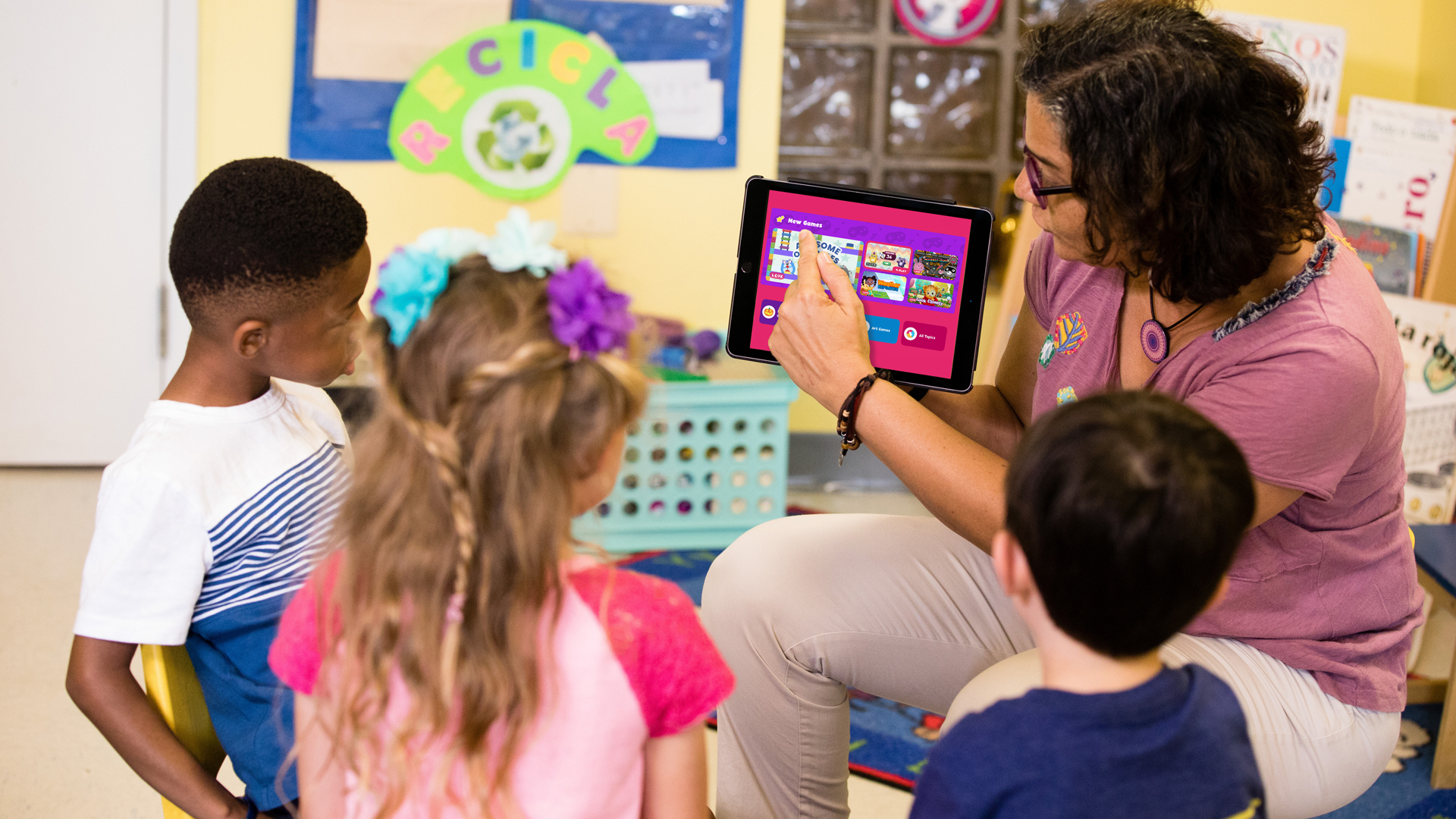
From the very beginning, PBS experimented with how mass media could provide education. In Mr. Rogers’ Neighborhood, Fred Rogers pioneered speaking directly to preschoolers, breaking the fourth wall, the traditional invisible separation between a program and the audience. Joan Ganz Cooney, cocreator of Sesame Street, adapted commercial television techniques like advertising for teaching—for example, turning sponsor messages into playful learning devices with lines like, “Today’s show is brought to you by the letter A and the number 2.” Over the years, PBS became known for documentary-style programming, which is now widely used in classrooms from middle school to higher ed as well-researched, engaging content. Today, with shifts in technology, PBS continues to innovate through digital platforms, including educational games that let kids practice lessons introduced through video.
How has public broadcasting supported education in rural or geographically isolated locations?
Public broadcasting has supported these communities through both access and representation. With a nationwide network of local stations, PBS provides near universal broadcast access, delivering educational content directly into homes. Just as important, programming reflects rural life, so kids see themselves in the content. For instance, Molly of Denali, though set in Alaska, has resonated widely with rural audiences and boosted literacy. Local stations also produce regionally specific content, ensuring diverse communities are showcased. Today, 70 percent of the markets with the greatest PBS reach are smaller rural communities, and thirty-five of the top fifty PBS markets are rural.
How has public broadcasting supported education for historically underserved populations?
About fifteen million children ages two to eight watch PBS Kids, the majority from low-income homes. These children, along with Black and Hispanic kids, spend more time on PBS than on any other children’s cable networks on linear television [programming delivered in real time, not on demand]. For middle and high school students, PBS LearningMedia prioritizes Title I communities—schools where many students qualify for free or reduced lunch—by ensuring access to quality content and supporting local stations in outreach so families and educators know these resources are available.
What are some examples of local PBS stations partnering with colleges and universities?
PBS stations partner with institutions to conduct research and ensure content meets educational goals. Arizona PBS works with Arizona State University, Tempe’s School of Education to assess educational impact, while the University of California, Los Angeles (UCLA), helps analyze usage data—from video viewing to gameplay—to better understand children’s learning paths. With the University of California, Irvine, PBS collaborates through a National Science Foundation grant on research and development using AI to explore how young children might engage in conversation with on-screen characters. Similar partnerships exist at stations across the country.
What distinguishes PBS Kids’ approach to educational media from commercial children’s programming?
A clear differentiator for PBS Kids is educational impact. We are curriculum driven, working with university partners nationwide to develop learning frameworks that ensure content is developmentally appropriate and tied to state and local standards. That’s a very different approach from most commercial programming. Today’s media landscape for children is dominated by profit- and algorithm-driven platforms with little curation or regulation. In contrast, PBS Kids offers a publicly funded, noncommercial alternative that keeps children’s best interests at heart rather than the bottom line.
How does the K–12 educational programming that PBS Kids produces create building blocks for higher education?
PBS Kids builds skills for school and life by focusing on what educators say students most need. Shows like Weather Hunters introduce STEM concepts like ecosystems and pressure that students build on later, while other shows teach computational thinking, such as recognizing patterns and commands. Research confirms the long-term impact: A UCLA study found that teens who watched Daniel Tiger’s Neighborhood as preschoolers still used its social-emotional strategies to manage feelings and resolve conflict, showing how early media can provide lasting building blocks for learning.
What are some critical ways PBS has historically used federal funding?
Federal funding has been essential to PBS’s mission. At times, it made up nearly 30 percent of the production budget, directly supporting the creation of shows, games, and podcasts. Just as important, those dollars enabled local stations to bring free educational resources, such as PBS LearningMedia, into schools and communities, mapped to state and national standards. Federal support also funded rigorous evaluations—randomized controlled trials and other studies—that measured how children learn from media and advanced understanding across the entire field. Finally, it has underwritten accessibility efforts: The National Center for Accessible Media at WGBH in Boston pioneered closed captioning with federal funds, and more recently, PBS has produced American Sign Language–interpreted episodes to ensure preschoolers who are deaf or hard of hearing can fully engage.
Could defunding PBS Kids widen gaps in college readiness between low-income and more affluent students?
Yes, defunding has that risk because PBS Kids content has been proved to close [those gaps] and serves as such an effective tool. While PBS has a vast library that will remain available, continued support is essential to sustain its role in leveling the playing field for low-income and underserved students.
What’s your response to assertions that PBS has an inherent liberal bias and engages in cultural indoctrination?
In my twenty-six years at PBS, I’ve consistently heard our content described as accessible to everyone, created to reach a wide audience across the United States. The claim of liberal bias or indoctrination simply doesn’t reflect my experience making PBS Kids programming. Having lived in both red and blue states, I often hear from parents who value the lessons our shows emphasize—respect for adults, constructive approaches to conflict, and stories that connect with children where they are. These standards and practices guide all our productions, and they are qualities parents across the political spectrum regularly tell us they appreciate.
PBS adult viewership skews older on most of its platforms with more than 50 percent of viewers being over fifty. How can PBS better engage college students and younger audiences as viewers, advocates, and donors?
PBS Digital Studios produces shorter-form documentary content on YouTube that reaches a much younger audience, primarily people in their thirties and forties, with strong engagement from middle and high school students as well. The challenge is helping students and young adults find that content and know it exists. By applying the same trusted tools PBS uses across all its media to shorter, more responsive formats, Digital Studios is connecting with audiences who expect a more immediate and interactive experience. That’s an important step in cultivating future viewers, advocates, and donors.
Does PBS have opportunities for college student journalists?
Yes. PBS News Hour runs the Gwen Ifill fellowship program for students and recent graduates, as well as Student Reporting Labs, which engage high school and college students in local journalism. Many stations also run their own, similar initiatives. For example, PBS Hawai‘i offers HIKI NŌ, where elementary, middle, and high school students produce news stories and short documentaries on issues that matter to young people on the islands. Across the system, stations promote student journalism in similar ways.
How can higher education leaders and faculty amplify PBS’s case for continued public investment?
Institutions can play a key role in amplifying PBS’s case by demonstrating its importance for research and teaching. Studying public media helps us better understand the powerful effects of media—how educational programming shapes students’ and adults’ lives, how people learn from it, and how they can build on it. Colleges and universities also train the nation’s teachers, who need our trusted resources for their classrooms. By making clear that PBS content is classroom ready, curriculum supportive, and effective, higher education leaders can help ensure its educational value is widely recognized.
How might weakening public broadcasting affect the health of US democracy?
Weakening public broadcasting takes away a critical alternative to the commercially driven media behemoth. We need content that places the needs of children and learners at the center, rather than being driven solely by commercial interests. A strong, noncommercial educational media option gives people a wider understanding of this country’s stories and supports the skills and curriculum areas teachers want students to learn. Both are essential to the health of our democracy.
If you could imagine the ideal future for public broadcasting and education in the United States, what would it look like?
The ideal future for PBS would include a more consistent funding stream to support both the creation and the research of content, allowing us to keep pushing the field forward. Public media has always experimented, whether through early interactive educational games or through university partnerships that measure impact. Side by side with higher education, we can continue creating content while expanding discoverability and reach. Ideally, we would be funded more, not less, so we could experiment with new content areas and serve audiences we currently miss who deserve media focused on their needs.
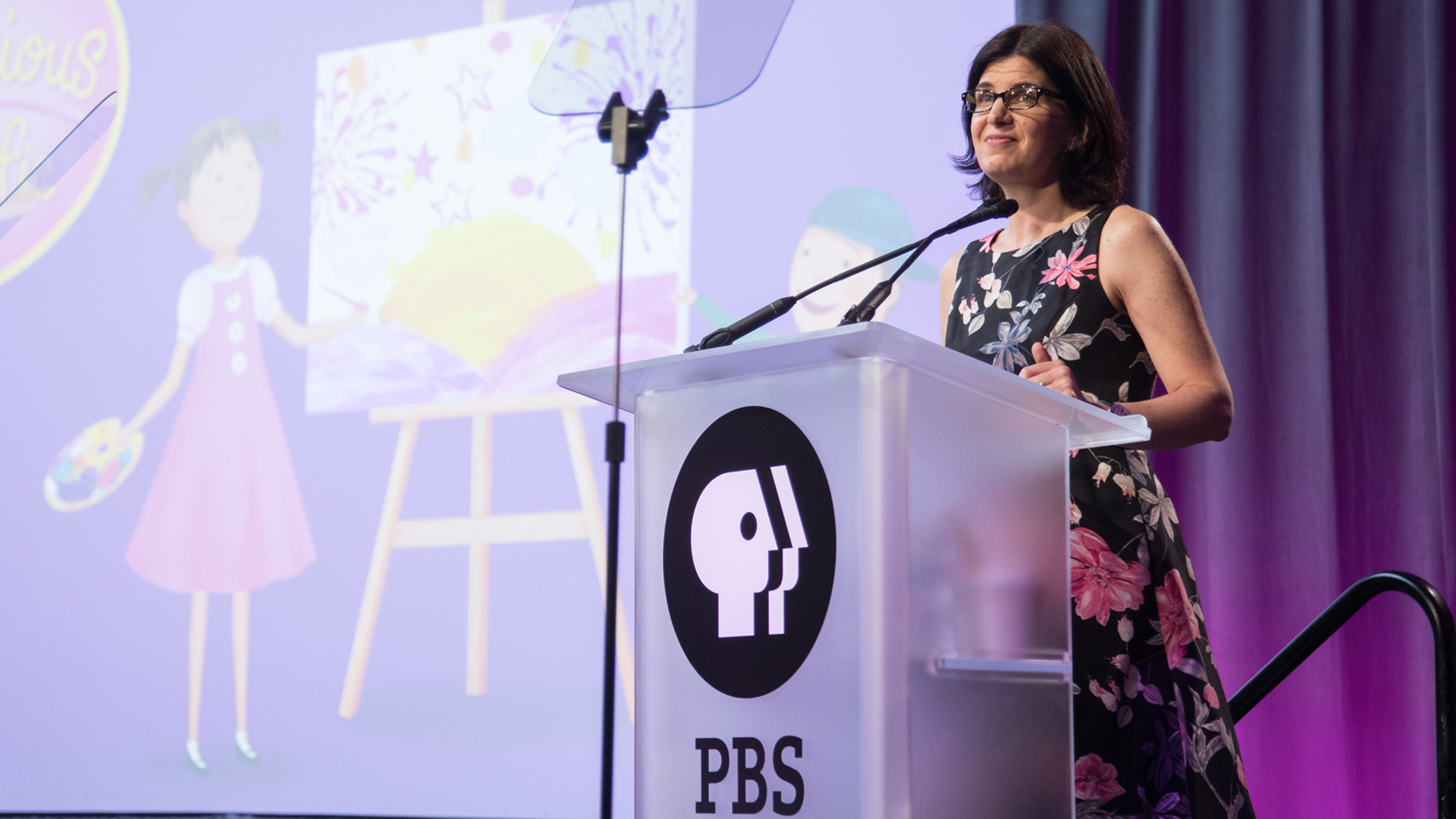
Lead photo: Sara Dewitt, senior vice president and general manager of PBS Kids (Rahoul Ghose/PBS)
Exclusive Content
Subscribe to unlock all issues and articles
You have reached the maximum number of free views. Please login or become a member to continue reading.