
In Recovery
How campus programs are changing the narrative around substance use
⚠️ You have free article remaining.
Log in or become a member for unlimited access.
College is, for many students, a collision of factors that can lead to increased alcohol and drug use. Undergraduates are often in a transitional stage of life, away from parental supervision for the first time in their lives. Bars and businesses around campus market directly to them, and societal expectations about college almost always involve partying and drinking. Meanwhile, some turn to alcohol and drugs as a coping mechanism for the intense stress of coursework.
This “college effect” can add up to a “perfect storm of experimentation around substances,” according to Kristina Canfield, executive director of the Association of Recovery in Higher Education (ARHE). And for some students, Canfield says, that experimentation leads to addiction, or substance use disorder, a chronically relapsing brain disease.
Colleges and universities across the country are, in turn, stepping up their efforts to prevent substance use and support students in recovery from substance use disorder. Those latter efforts are known as collegiate recovery programs, and their numbers have exploded in recent years. Just a handful of such programs existed in 2010, but now the ARHE counts more than 150 of them in the United States.
It “looks different on every college campus,” Canfield says, but “at its heart, it’s peer support.”
Collegiate recovery programs can provide a range of services, such as twelve-step meetings like those offered by Alcoholics Anonymous. (AA’s free meetings happen all over the world and lead people through a “set of spiritual principles” to reach and maintain recovery from alcohol addiction.) The college programs can also include informal hangout spaces (where students can meet with others in recovery) and sober tailgates (which provide an alternative to the often alcohol-fueled activities connected to sporting events). Some programs offer coaching to students in recovery, where students meet one-on-one with a counselor, and a few offer supportive housing. None of them, however, function as clinical or rehabilitation treatment for students needing medical attention. Instead, these efforts are aimed at helping students with substance use disorders stay sober and thrive on campus.
Just about half of college students aged eighteen to twenty-two reported drinking alcohol in the past month in the federal 2022 National Survey on Drug Use and Health, while about a third said they had engaged in binge drinking (more than five drinks for men and more than four drinks for women in two hours) in that period. Not all alcohol use leads to addiction, but around 14 percent of full-time college students in 2023 met the criteria for alcohol use disorder, defined as a “pattern of drinking [that] results in repeated significant distress and problems functioning in your daily life,” according to the Mayo Clinic.
Alcohol use can cause many problems for students, including academic difficulties like missing class or falling behind on work. In addition, half of all sexual assaults, including those that happen on college campuses, involve drinking, according to a 2020 report from the Johns Hopkins Center for Injury Research and Policy.
Meanwhile, about a quarter of college students reported cannabis use in the past thirty days, and 4.2 percent said they used other drugs during that time frame in a 2023 survey from the University of Michigan. Cannabis use “adversely affected college academic outcomes, both directly and indirectly through poorer class attendance,” according to a University of Maryland study. The use of cocaine and prescription stimulants can pose a significant health risk, especially when paired with alcohol use.
The current prevalence of alcohol and drug use on campus represents some historic highs and lows. Rates for alcohol, cigarettes, and nonmedical use of prescription drugs are lower than they’ve been since the 1980s, which is as far back as the Michigan study analyzed. But cannabis use is still hovering around an all-time high for college students, as are nicotine vaping and use of psychedelics other than LSD. (The harms of nicotine are well documented, while the risks of psychedelic use are still not fully understood.)
With substances still a significant, and often problematic, part of the college experience from which many students are looking to abstain, recovery programs are filling a gap in support services.
“It’s not treatment. It’s not an intervention,” says Patricia Maarhuis, who leads the State of Washington Collegiate Recovery Support Initiative. “It’s an affiliated group of students where we create a supportive environment.”
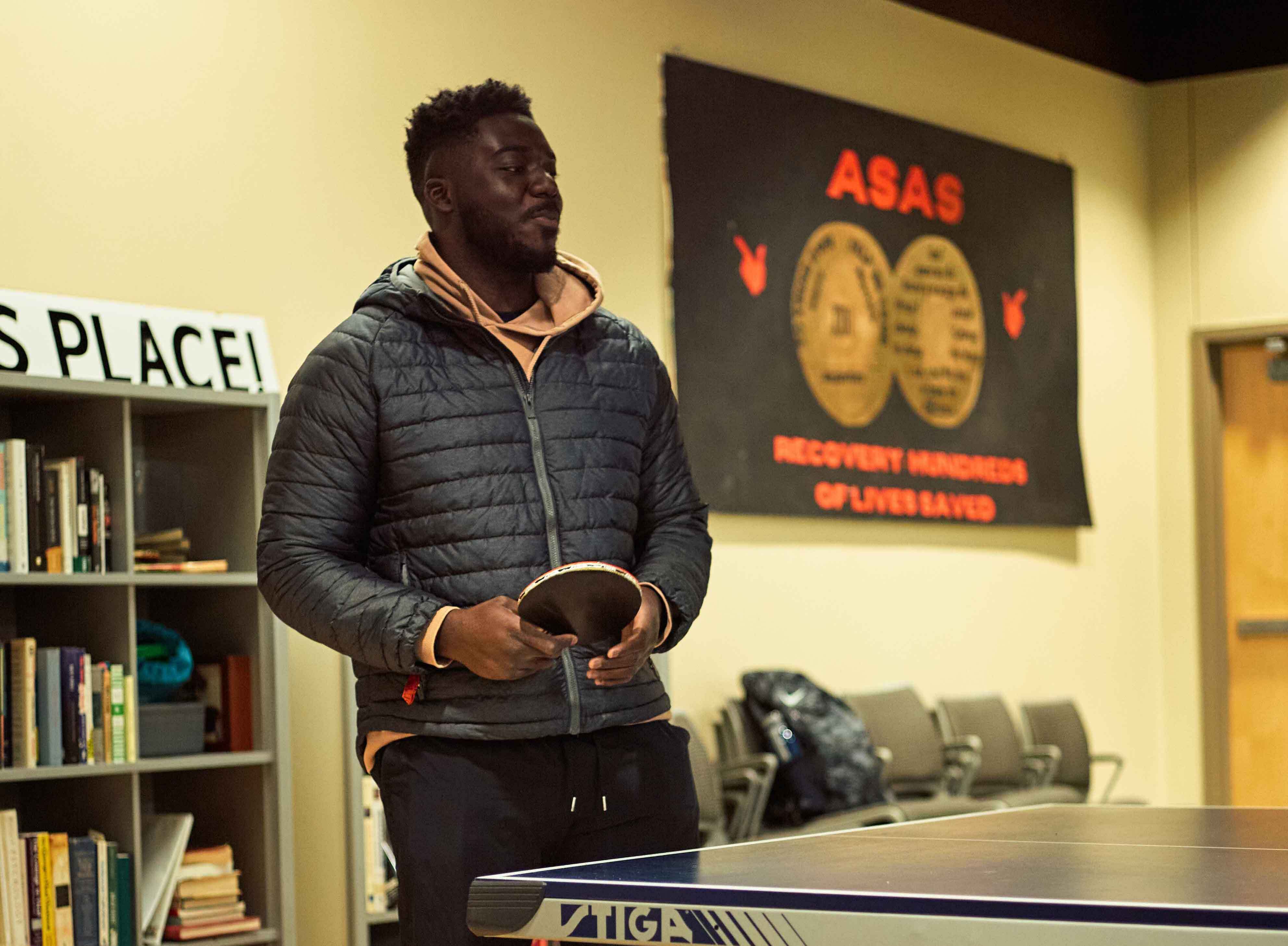
The first trio of collegiate recovery programs in the United States emerged in the 1970s and 1980s at Rutgers University, Brown University, and Texas Tech University.
Texas Tech, located in the city of Lubbock, has one of the largest programs, both in terms of students served and size of facilities. The university’s Center for Students in Addiction Recovery spreads across three floors, providing a computer lab, kitchen, and rec room (with pool tables, Ping-Pong tables, and video games) for students in the program to use. It offers a dozen group recovery meetings every week, including traditional twelve-step as well as yoga. These options allow students to choose the type of recovery support that fits them. The center also provides nutritional support, recovery housing, academic advising, tutoring, and academic supplies.
Though some Texas Tech students learn about the center after they enroll, the program primarily acts as a magnet for people in recovery who are interested in returning to or enrolling in college for the first time. In other words, the center gives prospective students a pathway into higher education, providing application help, scholarships, and then community support after they enroll. The center is currently supporting ninety-six students through scholarships.
The center recruits individuals who are already in recovery for about a year, which is in contrast to some other collegiate programs that help students earlier in their addiction and recovery journey. “We really want someone who is relatively stable in their recovery,” says William Gerber, director of the center and assistant professor in Texas Tech’s Department of Community, Family, and Addiction Sciences. Gerber says the center recruits students through events and presentations at local treatment centers, civic organizations, and conferences. Plus, alumni and friends of the center spread the word in other recovery circles.
The Texas Tech program helps students succeed on a day-to-day level to balance the demands of college life and recovery. In addition to the menu of meetings and resources, undergraduates are required to attend a weekly, one-hour seminar taught by the center that covers college basics, such as finding classes around campus and fitting recovery meetings into their schedule.
Gerber says the experience of higher education itself can give students a sense of purpose, which can, in turn, aid their recovery. “It changes the identity from an addict to a graduate, to a professional,” he says.
Zane Dailey, a twenty-three-year-old student at Texas Tech, knows exactly what that’s like. He arrived on the campus after nearly a decade of struggling with substance use, cycling through rehab and working what he calls “dead-end jobs.” Someone at a treatment center suggested he move to Lubbock, specifically so he could access college through the Texas Tech recovery program.
But Dailey, who had previously attended a different college, was at first hesitant to try Texas Tech, even after he had maintained sobriety for a while. “My last experience [in college] ended with me getting high and dropping out, and I didn’t want that to happen again,” he says.
At Texas Tech, his experience has been completely different. Some of his peers from the broader recovery community were already enrolled there, which helped him acclimate to college life. Plus, the recovery center acts as his safe space. “It doesn’t matter what I’m struggling with, I feel like there’s always someone who can help me,” he says, referring to the community of other students in recovery as well as the center’s staff.
The recovery program is not only what brought Dailey back to college; it’s also what’s keeping him there. He’s studying education, with the goal of becoming a high school teacher.
Dailey’s story speaks to the value that Gerber sees in these types of campus programs, particularly when it comes to recruitment, retention, and student success.
“Collegiate recovery has a huge return on investment for the university and, of course, an even larger return on investment for society,” Gerber says.
The significant growth of collegiate recovery programming across higher education started around 2012, as more state and federal funding became available to support collegiate recovery, according to ARHE’s Canfield, who is herself in long-term recovery. The Covid-19 pandemic spurred another funding boost, pushing the number of programs in the United States past a hundred. And as recently as 2023, the White House called for a 25 percent increase in the number of collegiate recovery programs as part of its National Drug Control Strategy.
Along with that growth, collegiate recovery programs are beginning to embrace a “multiple pathways” approach. That means the programs allow different choices in how to reach and maintain recovery and don’t always insist on traditional abstinence but, rather, can include harm reduction as one option. That strategy aims at making drug use safer for anyone on campus by providing things like naloxone, a medicine often used in the form of a nasal spray that can treat an opioid overdose in an emergency (opioids can include both prescription pain medications and illegal drugs like heroin).
In other words, while some programs are still strict about abstinence, others now offer a mix of
abstinence-based and harm-reduction approaches in an effort to reach more students.
The state of Washington has embraced the harm reduction model and has supported a burst of new and expanded collegiate recovery programs through its Collegiate Recovery Support Initiative, which offers grant opportunities to campuses. Since its creation in 2020, it has helped fund seven such programs. As part of the initiative, Washington State University supplies training, guidance, and resources to grant recipients as they create recovery programs. Maarhuis, who helps run the initiative and also works in health services at Washington State University, says the initiative supports a broad approach to addiction and recovery support, including the view that substance use is tied to issues of mental health. This approach includes harm reduction techniques like the distribution of naloxone and fentanyl test strips (which allow drug users to test for often-fatal fentanyl in drugs they might ingest and therefore lower their risk of overdose). Providing these items is also now required by law on all college campuses in the state of Washington.
Skagit Valley College, a community college north of Seattle, is one of the institutions that has started a program with funding from the initiative. Entering its fourth year, Skagit’s program is mostly student-led and focuses on community building. It features weekly meetings of a “Breaking Free Club” that grew out of a support program for students who had previously been incarcerated. It now serves any student needing help with substance use recovery. The program does not follow a twelve-step format but rather offers a space for students in recovery to find mutual support and encouragement. The students also organize occasional outings to the zoo or the bowling alley.
Sarah McCutcheon, a forty-five-year-old mother of three and a student at Skagit Valley, says the club has been a crucial part of her success in higher education. She started working toward her associate’s degree in human services after being released from prison and receiving financial assistance (from a mix of federal aid, workforce grants, and scholarships) to go back to college.
“It’s been amazing,” she says of her experience with the Breaking Free Club. McCutcheon has dealt with substance use disorder for the majority of her life, and the community of other students in recovery helps her feel like she’s on the right path, supporting a goal she never thought she would achieve: earning a college degree. “It’s been such a positive change in my life,” she says.

As collegiate recovery programs have grown in number, so too have the efforts of scholars studying their efficacy.
Noel Vest, an assistant professor at the Boston University School of Public Health, has focused much of his recent research squarely on collegiate recovery and sees a lot of evidence for its positive impact.
“The alcohol industry has done an incredible job at forming a narrative, so that by the time a student gets to college, they think that drug and alcohol use is a rite of passage,” he says. “Collegiate recovery programs do a great job at creating a different narrative around substance use.”
A 2020 research brief from Syracuse University summarizes the evidence: “[College recovery program] students generally obtain higher grade point averages than institutional and national averages, and relapse rates are exceedingly low,” writes Austin McNeill Brown. “Over 90% of CRP students remain sober during college and beyond.”
Of course, there are limits to what a recovery program can do. All the programming in the world won’t guarantee that every student remains in recovery. “We can’t want somebody to be sober more than they want to be sober,” says Katherine Drotos Cuthbert, assistant director of alcohol and other drug education at Vanderbilt University’s Center for Student Wellbeing. “As adults, they have to make decisions on their own.”
Vest is currently working on a follow-up to a landmark 2014 study of the twenty-nine collegiate recovery programs that existed at the time. Vest’s new study will capture the huge growth, and diversity, in collegiate recovery programs over the past decade—and likely give new insights about their efficacy.
But researchers and participants are not the only ones who see value in these programs. Increasingly, college and university administrators are backing the effort, too.
Samantha Jane Armstrong Ash is one of them. She’s the assistant vice president of student life and dean of students at Eastern Washington University, and she believes recovery support is a crucial piece of overall student wellness.
She points to the opioid crisis affecting communities across the country (three-quarters of overdose deaths in 2020 involved an opioid, according to the Centers for Disease Control and Prevention) as evidence that higher education needs to be involved in the solution to substance use and addiction. “That [crisis] doesn’t just happen outside the walls of education. Our postsecondary institutions are a microcosm of society,” she says.
Though student resource centers can sometimes be stretched thin as they try to support a range of student needs with limited resources, Ash believes addiction recovery needs to be in the mix. Lawmakers’ efforts to boost state funding for these programs in Washington has made university leaders in the state more aware of the need to invest in such student support, Ash says.
“We’re remiss as educators if we don’t look at the holistic well-being picture,” Ash says.
While collegiate recovery programs are a newer concept on many campuses, alcohol-related education (with the goal of reducing use and addiction) has historically been much more common and has been required by federal law since 1989. Any college or university that receives federal funding must provide prevention education about alcohol and drugs on campus. (“There’s no requirement around supporting students in recovery,” ARHE’s Canfield notes, something her organization is lobbying to change.)
Vanderbilt University is one place where prevention work occupies an important spot alongside recovery programming. The university’s Center for Student Wellbeing runs an “alcohol and drug misuse prevention week” in concert with a “recovery week,” for example.
During prevention week, students can take a driving under the influence prevention course, where they drive golf carts or do a walk-and-turn sobriety test while wearing distorted-vision goggles. The week also includes a sober tailgate before a football game and a “potions and pumpkin painting” event featuring nonalcoholic beverages. “We do try to bring a little bit of levity with it,” Cuthbert says.
As part of recovery week, the wellbeing center invites students to a similar roster of social programming aimed at creating low-stakes entry points to talk about recovery. Students can also take part in trainings on using naloxone and preventing overdoses.
It’s precisely this combination of prevention, recovery, and harm reduction work that Cuthbert sees as the secret sauce to helping students either avoid or recover from addiction and thrive in college: “One thing doesn’t solve everything. It’s meeting people where they are,” she says.

Many in the field of collegiate recovery have watched in awe as the number of programs has ballooned.
“The expansion is incredible,” says Cuthbert, whose recovery support program at Vanderbilt is sixteen years old.
While there’s plenty of enthusiasm around starting more programs and growing existing ones, challenges certainly remain. One of the largest is the misconception, on some campuses, that substance use isn’t a problem at their institution. “There’s still this interesting level of denial sometimes at that administrative level,” Canfield says. “That stigma is still very much alive and well.”
Funding is a related obstacle for collegiate recovery programs not fully supported by campus budgets. The Texas Tech program, for one, relies almost entirely on private philanthropy. Vest, the researcher at Boston University, says some programs rely on whatever mix of funding they can get their hands on: support from their institution, private donations, and state and federal grants (which may get harder to obtain with the Trump administration’s moves to cut funding from the National Institutes of Health and other sources).
Finding a reliable funding stream is crucial to supporting the ambitions of collegiate recovery as most programs—even the oldest ones—are in growth mode. Gerber at Texas Tech, for example, wants to double his program’s capacity to assist students and do more to help them transition to professional life after graduating; that might involve additional education on how to continue recovery beyond college. In the state of Washington, Maarhuis is working to embed the current state funding stream into legislation, guaranteeing its availability to support collegiate recovery programs for longer periods.
Crucially, Maarhuis is also trying to build an understanding among institutional leaders of what collegiate recovery is and why so many students need it. “I do believe that shift is slowly coming,” she says.
Lead photo: Texas Tech University’s Center for Students in Addiction Recovery
Exclusive Content
Subscribe to unlock all issues and articles
You have reached the maximum number of free views. Please login or become a member to continue reading.