
How Did We Get Here?
History provides valuable lessons for surviving today’s higher education crisis
⚠️ You have free article remaining.
Log in or become a member for unlimited access.
As a historian of higher education, I’ve long been interested in the evolution of American colleges and universities—a theme I explored in my 1992 article “The Ten Generations of American Higher Education,” published in History of Higher Education Annual. The article argues that since 1700, the higher education system has undergone fundamental changes roughly every thirty years.
When I revised my essay in 2022, I was aware that the tenth generation, which began around 1980 and was characterized by neoliberal policies such as market logic and privatization, had come to an end. The nature of the higher education landscape had substantially changed.
By 2022, battles over campus speech and diversity initiatives, along with escalating skepticism about the public value of a degree, had turned higher education into a stage on which broader partisan divides were rehearsed. Those divisions foreshadowed the more sweeping efforts the Trump administration is now directing at curtailing the sector’s autonomy and funding. Today’s convergence of political hostility, financial instability, and cultural mistrust presents higher education with a test more extensive than any it has endured before. Yet, to call it unprecedented is only partly true. Past moments—the ideological loyalty tests under McCarthyism in the early 1950s, the student rebellions of the 1960s, and the fiscal turbulence of the neoliberal years—likewise unsettled the very foundations of the academy. Each time, institutions adapted, sometimes haltingly, to new realities. Understanding how they navigated those inflection points provides a critical perspective on how the sector might respond to the current challenges.
One of the most dramatic inflection points came in the late 1940s and early 1950s, at the onset of the Cold War, as anti-communist sentiment swept through the United States and McCarthyism emerged with Senator Joseph McCarthy’s investigations and hearings aimed at rooting out alleged communist infiltration in the country, including on campuses. Congress and state legislatures tried to purge institutions of members and former members of and even sympathizers with the Communist Party. The University of California Board of Regents, for example, required faculty to swear that they were not members of the Communist Party, and the board fired several loyal professors who refused to take the oath. Congressional and state committees interrogated faculty members about their communist ties and pressured them to name colleagues with communist connections. These actions created a climate of fear that discouraged research, debate, and teaching on liberal topics.
The ways in which political fears and the government’s desire for ideological control affected higher education echo in today’s debates about government oversight, free speech, and curriculum bans. Some states have enacted laws restricting how race, gender, and/or politics are taught. Just as the loyalty oaths and investigations of the McCarthy era sought to control intellectual inquiry, today’s curricular restrictions attempt to police classroom discussion under the guise of political neutrality. Since 2021, according to a 2024 PEN America report, more than 360 educational gag orders have been introduced across forty states, and although only twenty-two have become law, they have led to documented cases of faculty self-censorship and canceled courses.
The courts addressed similar questions about the reach of government authority in academia decades earlier. In 1956, California’s Supreme Court ruled that the University of California’s loyalty oath violated academic freedom, setting an important legal precedent. The court found that forcing faculty to disavow certain political beliefs as a condition of employment infringed on their constitutional rights, affirming that academic freedom is essential to the pursuit of knowledge in a democratic society.
Following McCarthyism, colleges and universities also gradually broadened their commitments to academic freedom and shared governance, increasingly incorporating them into faculty handbooks, governance structures, and tenure systems. Although the American Association of University Professors (AAUP) did not effectively defend due process and intellectual freedom during the McCarthy era, including not publishing a single investigative report on violations of academic freedom, it soon reasserted its role as the principal guardian of academic freedom, developing formal guidelines and conducting investigations that shaped institutional policy nationwide. Through its reports and the influential Redbook, the association’s definitive compilation of principles on academic freedom and tenure first published in 1968, the AAUP helped ensure that due process and intellectual freedom became—and remain—cornerstones of higher education.
By the 1960s, higher education again enjoyed both public prestige and institutional autonomy, bolstered by rapid postwar expansion, generous federal and state investment, and the growing belief that colleges and universities were engines of national progress. Campuses became symbols of intellectual vitality and public service, trusted to govern themselves in exchange for producing research, innovation, and educated citizens. The positive lesson from the McCarthy era is that colleges and universities can rebuild trust by reaffirming their role as protectors of open inquiry and student voices. The negative lesson is just as clear: Delays in defending core values can deepen harm and erode public confidence. Today, as institutions face political scrutiny over curriculum, funding, and governance, the history of McCarthyism attests that courage, clarity, and a commitment to academic freedom are essential for both survival and renewal.
Another critical test for higher education came with the student demonstrations and rebellions of the late 1960s, when protests over the Vietnam War, racial injustice, and university governance erupted across campuses nationwide. The unrest peaked in spring 1970, when clashes between students and authorities led some institutions to temporarily shutter. The upheavals punctured colleges’ and universities’ postwar moral authority, recasting higher education institutions in the public eye as chaotic and unmoored. This damaged their ability to define and pursue the public good. In responding, sometimes reluctantly, institutions broadened their receptiveness to student voices. Recent events such as the pro-Palestinian encampments demand a similar willingness to see such conflicts not only as a threat but also as an opportunity to re-examine policies about on-campus protests, freedom of speech, and student activism.
In addition, then as now, major research universities were the focus of government scrutiny and attention. For example, the President’s Science Advisory Committee, created by Dwight Eisenhower, cautioned against further expansion of academic research, noting that federal budgets could not indefinitely sustain growth. In 1969, Congress passed the Mansfield Amendment, which barred the Department of Defense from funding nonmilitary academic research. Blue-ribbon committees composed of government officials, industry leaders, and prominent academics—often sponsored by private foundations—advised reductions in federal support for academic research, de-emphasis of doctoral programs, and a shift toward more practical, economically oriented degrees.
As a federal official noted at the time, both the government and much of the public had come to believe that “higher education, like business and the professions, cannot be trusted to serve the public interest on its own initiative.” That skepticism grew out of a series of controversies ranging from campus protests and research scandals, such as revelations that universities had secretly conducted Pentagon- and CIA-funded research related to the Vietnam War, and accusations of neglecting teaching in favor of research, which made colleges and universities appear increasingly detached from public needs and accountability. Out of this distrust came a wave of federal interventions that reshaped governance, funding, and accountability across American campuses.
At the same time, Congress shifted the balance of federal support. Even as colleges and universities clamored for relief from mounting financial pressures, legislators directed new dollars to students instead of institutions. The Higher Education Amendments of 1972 created the basic framework of federal student aid that remains in place today, introducing Basic Educational Opportunity Grants (later called Pell Grants) and broadening federal loan assistance. Signed into law by President Richard Nixon, the legislation signaled a lasting transformation: Federal student aid would be tethered to broader public priorities of access and affordability, with the government shifting toward student financial aid, including loans, so that more low- and middle-income students could attend college. It also included Title IX, the landmark provision prohibiting sex discrimination in education. Affirmative action in hiring was another notable intervention.
The crisis of the late 1960s had two sides: On the one hand, colleges and universities lost public trust, fueling efforts to curtail or discredit their central pursuits. On the other hand, support for expanding access to higher education surged, and undergraduate enrollment nearly doubled during the decade. Out of this paradox came innovations, including lifelong learning programs that encourage adults to return to education throughout their lives and flexible “stop out” options that allow students to pause and later resume their studies. Experimental colleges with no traditional grades or majors—such as Hampshire College in Massachusetts and Evergreen State College in Washington—emerged alongside the spread of community colleges and the extension of federal student aid to for-profit vocational institutions. Research universities continued to build on the momentum of the postwar academic revolution—the expansion of the research funding, faculty professionalism, and graduate education that had transformed higher learning since the 1940s—with medical research remaining a federal priority.
Despite these gains and innovations, the lessons of the late 1960s remain valuable to contemplate today: When higher education forfeited moral authority at the end of the decade—amid campus unrest and growing perceptions of prioritizing research over teaching—it became vulnerable to charges of self-interest and to government intervention.
In the 1980s—the neoliberal era— colleges and universities discovered their untapped pricing power. Tuition soared, driven by expanded federal aid and the rise of differential pricing, in which institutional student aid for less wealthy students allowed greater tuition increases.
Reduced public investment, especially at the state level, exacerbated the situation. Elite private institutions grew wealthy on alumni donations, capital campaigns, and soaring tuition. At the same time, higher education reformers, public university leaders, and faculty organizations such as the AAUP warned that the widening gap between rich and poor institutions was deepening inequities across the sector.
On balance, higher education thrived—until neoliberal excesses of deregulation, financial speculation, and debt-driven growth triggered the Great Recession in 2007, deflating endowments and causing states to slash support. A fragile equilibrium followed, but efforts like President Barack Obama’s call for “college for all” faltered for lack of political support.
By the 2010s, growing political polarization in US society manifested in higher education as colleges and universities became entangled in the nation’s broader culture wars. Conservatives increasingly viewed campuses as dominated by liberal orthodoxy, citing controversies over disinvited speakers, protests against speech students perceived to be offensive, and efforts to expunge historical figures such as President Woodrow Wilson.
At Yale University in October 2015, students occupied a residential college dining hall in protest of a faculty member’s email dismissing their concerns about culturally insensitive Halloween costumes. The students also demanded the resignation of administrators. Two years later at Evergreen State College in Washington, protests over a professor’s objection to a race-related campus event shut down classes and led to his resignation. These episodes, driven by progressive activism and amplified by partisan media outlets, reinforced perceptions among some critics that colleges and universities were prioritizing ideological conformity over open inquiry. Campus protests became symbols of the broader political divide, negatively affecting perceptions of higher education.
Public confidence in higher education fell from 57 percent in 2015 to 42 percent in 2025, according to a July 2025 Gallup poll. Recent data from the Pew Research Center confirms the downward trend, showing that seven in ten Americans now say that the US higher education system is “going in the wrong direction.” Behind these shifts lie a growing tendency to view higher education as a financial transaction. With tuition climbing and student debt more than doubling since the Great Recession, affordability and return on investment often pervade the current conversation. Roughly 60 percent of undergraduates now rely on federal loans, and growing awareness of future debt influences attendance decisions and the life choices of graduates. High school counselors increasingly point their students toward trade schools and other alternatives, even though statistics consistently show that college and university graduates earn more and live longer, fuller lives.
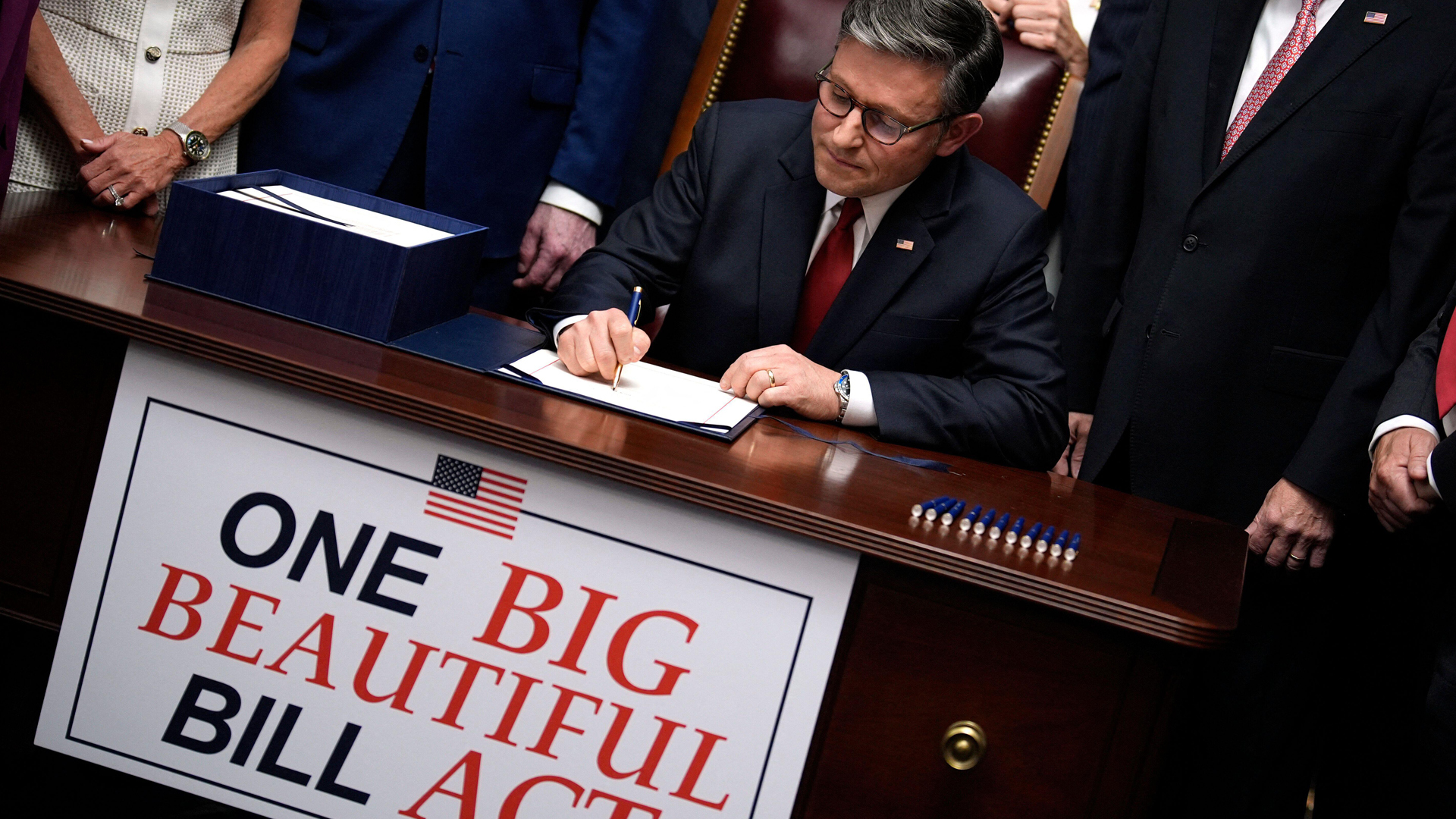
Despite parallels to earlier historic periods, an authoritarian turn distinguishes the present moment from previous ones. While the collapse in public confidence set the stage, the current crisis for higher education under the second Trump administration extends far beyond that and is of an extraordinary magnitude. The federal government is openly seeking to strip colleges and universities of their autonomy, to redirect funding to ideological priorities, and to silence research or teaching deemed politically unfavorable. Political assault, financial retrenchment, and public distrust are now entwined with an effort to weaken and destroy the independent authority of higher education itself.
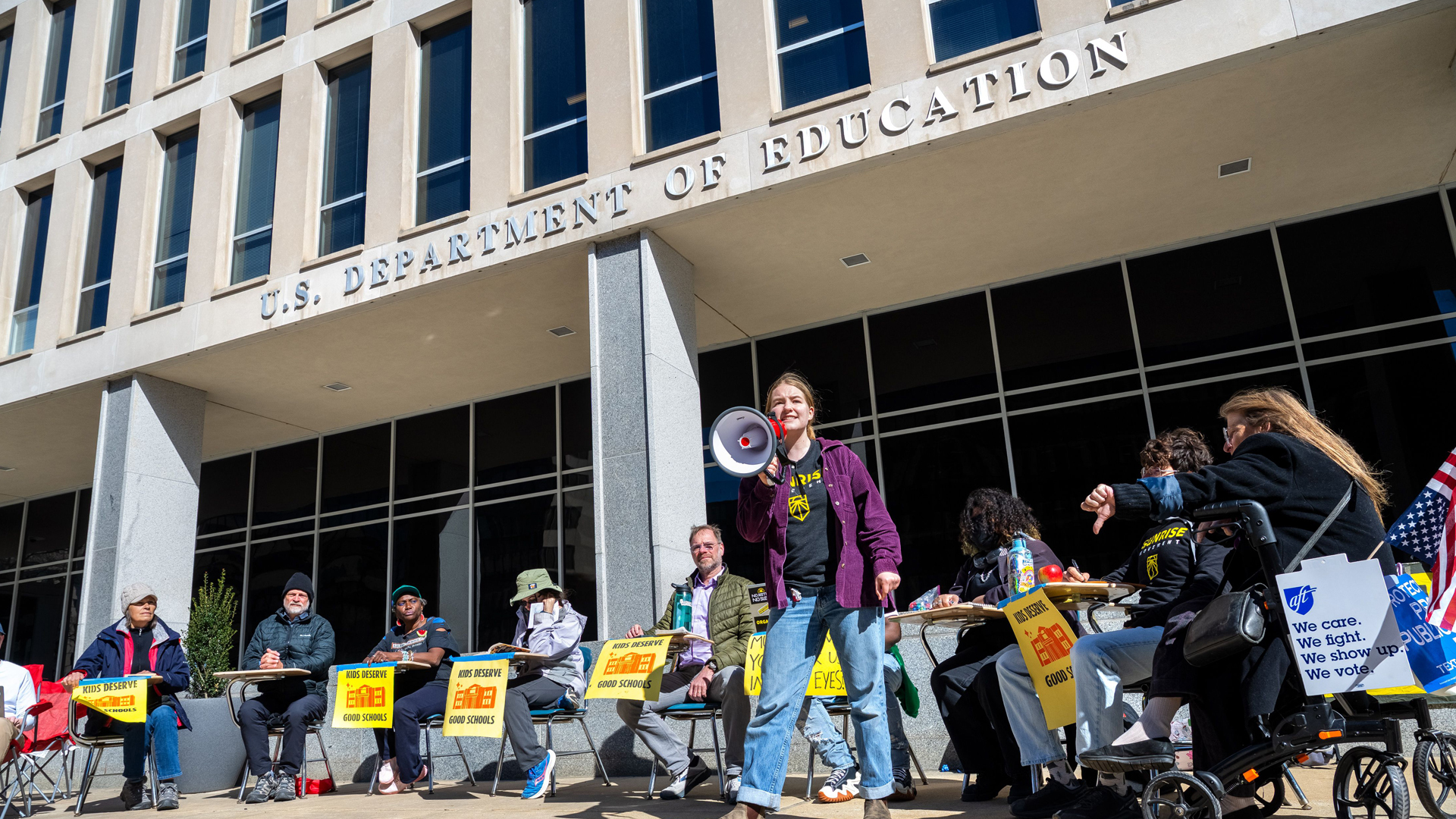
Since the start of Trump’s second term, the federal government’s relationship with higher education has been fundamentally adversarial. The Trump administration’s strategies serve two basic purposes. First, ideologically, they seek to obliterate the progressivism, or “wokeism,” that informs diversity, equity, and inclusion initiatives. Second, politically, the attacks on higher education are often an attempt to bolster Trump’s relationship with his right-wing MAGA political base. More broadly, the attacks on higher education are part of the administration’s larger effort to undermine a wide range of sources of independent authority, such as science, the courts, and public health officials.
We are now in a fundamentally new era for US higher education. At this juncture, we cannot know how the ongoing conflicts will turn out. The current situation, however, is not sustainable. The MAGA right lacks a constructive vision for higher education. It has only resentment, expressed through a deep animosity toward colleges and universities and their values. Progressive extremism is still dominant in higher education and has deepened polarization on campus by casting institutions as battlegrounds for ideological purity. If the United States is to persist as a knowledge society, colleges and universities need to retain their autonomy, assert core academic values such as free expression, and prevail over both MAGA and progressive extremism.
Looking ahead, the question is not simply how higher education will survive this moment but what vision of its public purpose will emerge from it. Restoring trust will require more than defending institutions from political attack—it will mean asserting their indispensable role in sustaining democracy, expanding opportunity, and fostering shared understanding in a fractured nation. Colleges and universities must reclaim their moral and intellectual authority by modeling open inquiry, resisting ideological capture from any side, and making clear to the public why independent knowledge remains essential to a free society.
Lead photos: Wikimedia Commons, Library of Congress, Alamy, Shutterstock, and iStock
Exclusive Content
Subscribe to unlock all issues and articles
You have reached the maximum number of free views. Please login or become a member to continue reading.