
Fit for a Fast-Changing World
Kingston University’s Future Skills program transforms English higher education with a liberal education approach
September 9, 2025
It was the ancient Greek philosopher Heraclitus who is said to have observed that change is the only constant in life. But even if constant change is not new, it certainly seems to have accelerated in its pace, intensity, and impact on our lives. One only has to think about how technological innovations in recent decades have transformed entire industries, and the jobs and services they offer, to imagine the range of new opportunities and challenges that generative AI and emerging technologies present. This fast pace of change poses a significant challenge to higher education institutions: How can we prepare our students for successful futures in life and work if the industries they choose to work in and the careers they aim to pursue might be transformed beyond recognition while they are in them or even before? What skills and attributes will they need to be successful over a lifetime in such fast-changing environments? How can we prepare them to become people who shape change to ensure that it benefits everyone in our communities?
These are the driving questions behind Kingston University’s Future Skills program. The program revolves around ensuring that every student on every course develops nine key attributes before they graduate: creative problem-solving, digital competency, a questioning mindset, enterprising spirit, adaptability, empathy, collaboration, resilience, and self-awareness. These are the core human-centric skills for innovation employers have told us they most value—and are now actively looking for in their recruitment and hiring practices—in what is a rapidly evolving professional landscape. Traditionally, higher education in England focuses on a narrow set of subject skills in a student’s chosen area of study. Future Skills brings our educational approach more in line with the qualities of a liberal education, with adaptable and transferable skills befitting a rapidly shifting workplace and world.
Kingston University has always been committed to equipping students with the skills they need to be successful in life and work. Founded in 1899 as Kingston Technical Institute to provide an affordable education to the local community, we have continued to focus on developing technical, professional, and creative education that spans the sciences, health, business, engineering, and the arts. Today, we teach around 20,000 students and offer more than two hundred different undergraduate and postgraduate degrees combined.
Students in England begin a process of skills specialization around the age of fourteen. This narrowing intensifies in higher education; a student who pursues a university degree in biochemistry, for example, will usually study only content directly related to biochemistry. In contrast to higher education in the United States, English colleges and universities, whose degrees are only three years, do not have a general education requirement, and electives are usually tightly tied to the main degree subject.
While the English system can be effective at cultivating students with a high level of technical skill, it can also result in a deficit of broader developmental and transferable skills. At Kingston University we are determined to ensure that our students are equipped with the necessary skills to adapt to the pace of technological change, so we sought to gain a deeper understanding of employers’ current needs. Since 2021, we have been working with the polling organization YouGov to regularly survey more than two thousand businesses about the skills they need from graduates over the coming decade. The results have shown that even more than technical skills, employers value uniquely human skills and attributes relating to problem-solving, communication, critical thinking, initiative, adaptability, creativity, relationship building, and analytical thinking—the kind of skills that a liberal education imparts. Employers want to hire and invest in graduates who can grow with their businesses, tackle new and unexpected problems, and adapt to unfamiliar environments. They need graduates who can lead change through creative thinking, effective collaboration, and other attributes that reflect essential life skills as well as technical ones. Equipped with these insights, we set out to transform how we teach through the development of our Future Skills program, centered around the acquisition of nine key Future Skills graduate attributes based on employers’ feedback.
Several key ideas underpin the design of Future Skills. First, we sought to put these nine most valued attributes at the core of all our undergraduate courses, from architecture and accounting and finance to forensic psychology and pharmacology. Next, we embedded the Future Skills program at every level of study, with each stage building progressively upon the one before. For our three-year undergraduate program, we named the three stages Navigate, Explore, and Apply. Navigate supports students in their transition to university with workshops that help them assess the skills they currently have, such as digital aptitude and AI prompt engineering. With the early introduction of interdisciplinary problem-solving, students’ awareness of how different subject areas view and solve the same challenges is broadened.
In the second year, Explore enables students to work directly with employers and students from other courses to build their knowledge and skills through what is known in the UK as simulated assessment centers—which help prepare them for the graduate recruitment process—live projects, and placements or site visits to businesses.
During Apply, the third and final stage of Future Skills, students refine and tailor their learning through interdisciplinary career coaching and skills development in and beyond the university to prepare for the first step of their professional career.
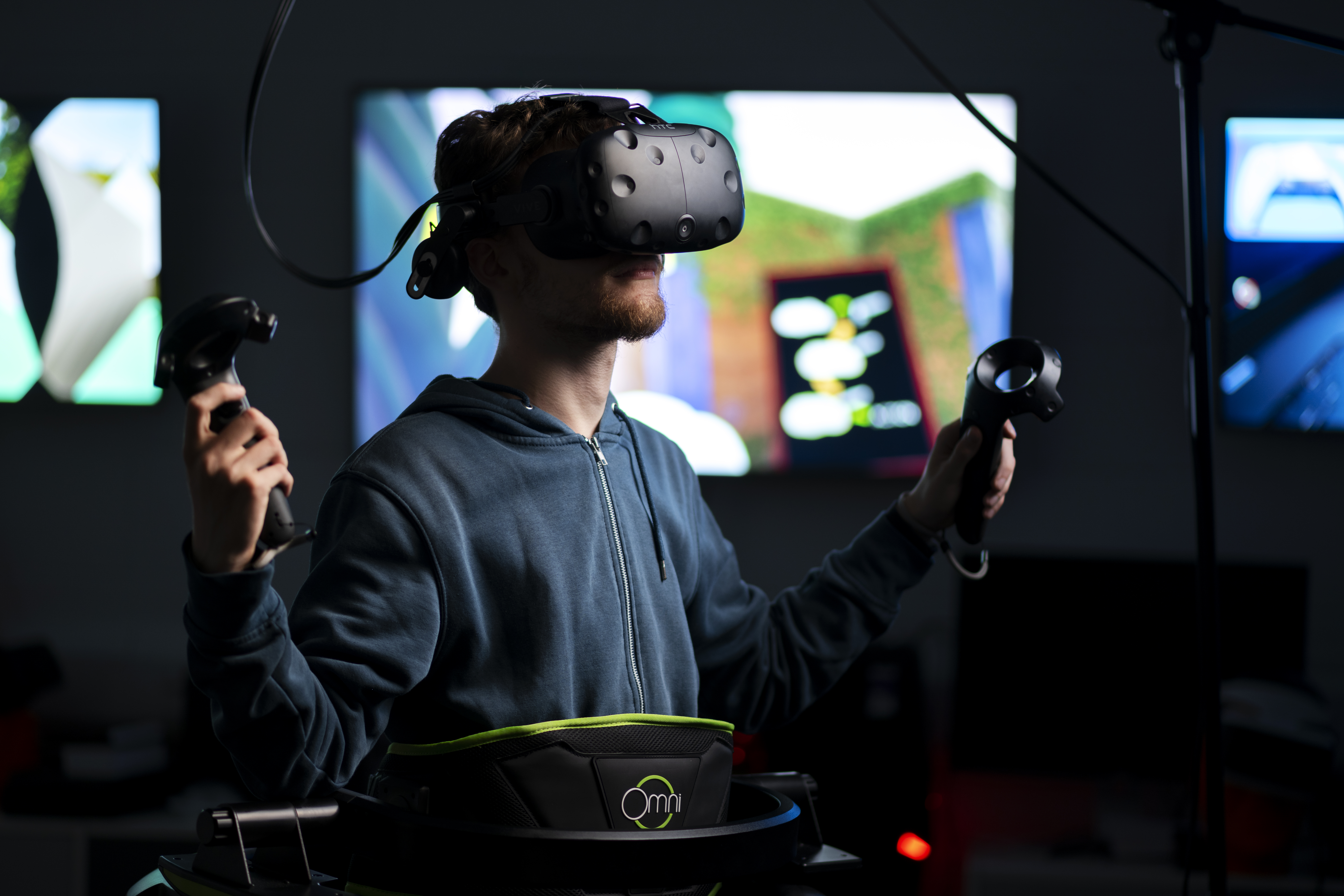
At each of these stages, the delivery of Future Skills aims to strike a balance between content that is common to all students and content that is specific to each course. All curricula include activities and workshops for personal and professional development, with specific attunement in disciplines such as nursing or social work, which have prescribed professional requirements. Students in social work, for example, build on their digital competence within frontline practice by learning how virtual and augmented reality can be used with clients.

Kingston University made the ambitious decision to implement Future Skills across the undergraduate curriculum without delay, designing and prototyping each stage of the program sequentially over a three-year innovative rollout that began in 2023. As of 2025, the program has been fully embedded in the undergraduate curriculum. We have, in effect, used a prototyping model to roll out Future Skills level by level, enabling us to move at speed, learn from each stage of implementation, listen to student and faculty feedback, and to refine our approach. Our Future Skills curriculum embeds this opportunity for all students, irrespective of their background. Most English universities offer extracurricular opportunities for developing career skills but find that the students who take up the opportunity are often the most academically or financially able. At Kingston University, many students come from the least privileged socioeconomic groups, and a high percentage are from groups historically underrepresented in higher education. Many live at home, work part-time, and just do not have time outside of their studies to take up extracurricular opportunities. This led us to embed Future Skills in every undergraduate course, with dedicated content at every level for every student. Future Skills is not an “add-on” to other learning. It is embedded as an innovative curriculum approach to the strong disciplinary tradition in English higher education.
An example of this can be seen in the second-year Explore module, which involves two experiential learning activities in addition to developmental workshops. Industry involvement plays a central role, supported by the university’s strong links and partnerships with a range of leading employers. Students in all disciplines spend half a day at a simulated assessment center, where they participate in a standard recruitment and hiring activity for graduates entering the British workforce. Often situated off-campus, an assessment center introduces students to the type of environment they may experience when they apply for a career position (and allows employers to see job candidates working in hypothetical situations). Our assessment center replicates many of the scenarios that job applicants will encounter and involves the participation of corporate employers which partner with Kingston University on Future Skills, such as the British retailer John Lewis Partnership, Adobe, and IBM. The practice scenarios, tailored to different industry contexts, can include short presentations on a topic related to a student’s area of study, work in small groups of students from multiple disciplines to produce a business recommendation, and hiring interviews.
Explore learning experiences are designed to suit disciplines that students are studying alongside developing the Future Skills graduate attributes that will set them up for their careers and life. In a collaboration activity developed with the John Lewis Partnership, the parent company of John Lewis & Partners and UK supermarket giant Waitrose, more than six hundred students from different disciplines developed creative business solutions to resolve current business challenges that the retailer shared. Some groups devised ways to help streamline data from farms, bakeries, and other Waitrose suppliers for quality assurance purposes. Other groups, which included computer science, digital media technology, and geography and geology students, developed approaches to analyze and respond to shifts in soil health, crop cycles, and weather patterns, which they then presented to Waitrose representatives. As with a liberal education, such activities help students integrate academic learning with practical experience, as well as encourage essential attributes such as adaptability, communication, teamwork, and analytical and creative thinking.
These corporate partners and graduate employers could also see the benefits. “Harnessing students’ creativity and problem-solving skills will mean we can tap into a fresh point of view to help us respond to some of the real-world challenges we face as a business,” says Hannah Wenlock, quality technologist from the John Lewis Partnership. “The food industry is moving at a phenomenal pace, with new technologies making a significant impact.” Research has commenced to measure the impact of the Future Skills curriculum on students’ development of graduate attributes and to collect feedback on their experiences.
“The main difference Future Skills has made for me is being able to enter the world of work with an open mind,” says Maria Alexe, a second-year architecture student. “Everything is not set in stone. In the future, I might not be an architect, so I need to adapt. Knowing those skills that I need in life will be helpful if I decide to change my mind.”
Bhavin Varsani, a graduating accounting and finance student says that the program has also expanded her outlook. “I get to expose myself to the industry,” Varsani says, “but at the same time, I get to develop the key skills that businesses most value. In an age of AI, skills such as creative problem-solving will set me apart in my professional field.”
As with any project to transform curricula across an institution, Future Skills has required considerable work to rapidly implement across the university. Departments have redesigned courses, developed new learning activities for students, and changed assignments. Our registry team updated course specifications and ensured that the student records system captured the range of student learning. To be successful, curricular redesign cannot be just an academic exercise; it requires buy-in from all parts of the institution and a commitment to achieving common goals.
Implementing the Future Skills curriculum has required the very attributes that we want our graduates to acquire: adaptability, problem-solving, and creative thinking. The process hasn't been based on a static blueprint but rather an openness to learn and a recognition that we aren’t going to get everything right the first time. In addition to the decision to test each stage during its development through prototyping, our curriculum development and teaching staff continue to meet regularly with student panels to gather feedback and work with academic and professional services teams to understand what is working well and what needs further development.
In addition, we continue to build on and further integrate our partnerships with leading employers to ensure currency with emerging workplace practices and to enable our students to make vital professional connections. We are one of a select group of European universities recognized as an Adobe Creative Campus, and Adobe is among the industry partners that have supported our Future Skills program and contributed to our campaign research on what businesses look for in graduates fit for the future. We also are working to influence government and public debate on Future Skills and the role of higher education.
A landmark moment for our campaign came in February 2025 during a Westminster Hall debate on Future Skills at the Houses of Parliament. The member of Parliament for Kingston and Surbiton and leader of the Liberal Democrats party, Ed Davey, championed our Future Skills approach and outlined how it could revolutionize higher education and boost skills across the UK economy. Davey urged other Parliament members to visit our university to see the program in action and advocated for government support and the potential to expand Future Skills across other UK institutions. Most recently, in June we launched our latest campaign report, Future Skills—Perspectives from East and West, at the House of Commons. It includes new polling in partnership with YouGov alongside contributions from Nanyang Technological University Singapore, adding an international perspective by comparing skill demands across major East Asian economies.
The public championing of our Future Skills approach helps us to mobilize our people, resources, and processes in pursuit of our mission to equip Kingston University graduates to become leaders of economic and social change in their communities. We believe that we are in the process of creating a transformative approach to English higher education that can benefit all students, whether at Kingston University or elsewhere. We hope that Future Skills can serve as a model for other universities seeking to extend beyond the traditional focus on disciplinary knowledge and skills with an embedded curriculum that provides learning of skills and attributes needed to be successful over a lifetime in fast-changing environments in a fast-changing world.
Lead photograph: Students work with a staff member on a business idea. (Kingston University)