
Courage and Purpose
Higher education under a second Trump presidency
⚠️ You have free article remaining.
Log in or become a member for unlimited access.
As I write this in mid-February 2025, just weeks into a second Trump presidency, the new administration’s sweeping actions have thrown US colleges and universities into a state of unprecedented uncertainty. Executive orders have targeted diversity, equity, and inclusion (DEI) programs and raised the possibility of Immigration and Customs Enforcement raids on campuses. The unofficial Department of Government Efficiency, led by billionaire Elon Musk, has announced cuts to funding from the National Science Foundation and National Institutes of Health and canceled nearly $900 million in contracts administered by the Institute of Education Sciences, the research arm of the Department of Education. While the courts have, at least temporarily, blocked some of the cuts, President Donald Trump says he plans to make good on his campaign vow to shutter the Department of Education itself.
In anticipation of these and other promised actions, following Trump’s win in the 2024 presidential election, Liberal Education invited three higher education presidents to take part in a frank discussion about the challenges, responsibilities, and opportunities colleges and universities are now facing. Santa Ono, president of the University of Michigan, Laurie Patton, recent past president of Middlebury College and current president of the American Academy of Arts and Sciences, and David Wilson, president of Morgan State University, offered their perspectives as longtime campus leaders. They talked about preparing for every eventuality, working with legislators on both sides of the aisle, restoring public trust in higher education, and communicating the true value of a college education. They emphasized the need to protect freedom of expression and academic inquiry and to educate students to serve as citizens of a democracy.
Lynn Pasquerella, president of the American Association of Colleges and Universities, moderated the discussion. As she pointed out, “At this moment of extreme moral distress for campus leaders, in which they feel coerced into making decisions they think are unethical but they feel they have no choice—and in which that moral distress often morphs into moral injury from the continual erosion of a moral compass—each of [the discussion participants] has demonstrated moral courage in the face of adversity and provided examples of how to engage in administrative joy despite the challenges we face.”
1. Freedom of Inquiry and Expression
‘Academic freedom is not an abstract ideal nor merely about defending speech that may push boundaries. At its core, it ensures an unfettered pursuit of truth.’
Lynn Pasquerella: There’s been a great deal of uncertainty with respect to what’s on the horizon with President Donald Trump’s second term and what the implications will be for higher education. AAC&U’s mission of advancing the democratic purposes of higher education by promoting equity, innovation, and excellence in liberal education is grounded in the presumption of the free exchange of ideas and unfettered pursuit of the truth. Yet over the past two years, there’s been a dramatic increase in efforts to impose educational gag orders and curtail free expression. What steps should campus leaders be taking to safeguard academic freedom and institutional autonomy?
Laurie Patton: In the past decade, many campuses have had a chance to review our academic freedom and freedom of expression policies. How is every piece of work that we do grounded in our policies of freedom of academic inquiry and freedom of expression, which should be renewed and refreshed and reviewed all the time by faculty, staff, and students?
A return to and review of our fundamental mission is going to help us stay grounded when there are political pressures on each of us. Private colleges and universities will experience things differently than public institutions. In states like Florida and Texas, where forms of legislation restricting academic freedom are super tough, campuses are having to do different kinds of work than in other places. One of the things that I said to my faculty, staff, and students was, “You don’t get to say, ‘I’m so glad I live in Vermont.’ You get to say, ‘It’s all of our jobs to defend what we do and how we do it.’ ”
I was also super strong with my entire campus on communicating the message: prepare, prepare, prepare for any eventuality, both possible opportunities as well as possible threats to what we’ve been doing. Whether it’s a federal policy that compromises our financial aid, whether it’s an opportunity to work with the government, let’s humanize the people who are mad at us.
It is incredibly important for higher education leaders to become literate in how the people who we disagree with think, especially if they are in a role of power. Middlebury has been working with the Vermont legislature—it’s super important to work with every single potential influencer in the government to think across the aisle and to begin to prepare in that way.
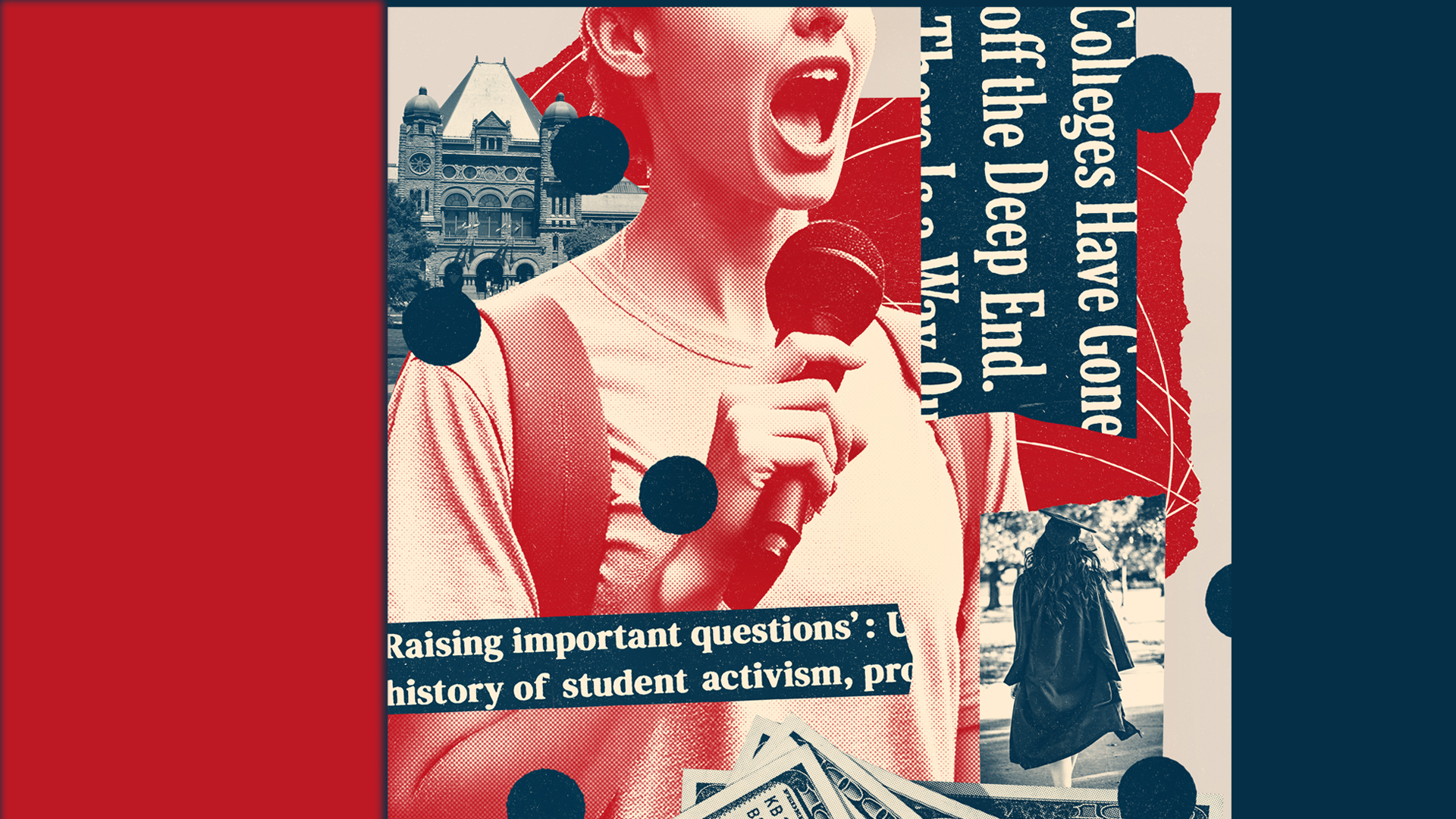
Santa Ono: Academic freedom is a cornerstone of the University of Michigan’s vision and history. We will not waver from the freedom of our faculty, students, and staff to speak and to go in terms of their thought process where they would like to go—one of the hallmarks of a great institution is to support that freedom.
We also have to live in the reality that higher education has been through a very difficult year and a half as a sector. On many of our campuses, and certainly at the University of Michigan, certain speech and activism, which the university has a long history of supporting, have been hurtful to members of our community. We have to be mindful that there are times when something is said or actions are taken that we might have been supportive of historically but that may be violations of Title VI (the federal law that prohibits discrimination on the basis of race, color, or national origin). The University of Michigan recently went through a settlement with respect to that. Although we support freedom of expression, we take very seriously our responsibility to protect people on our campus from a hostile environment and to support individuals who feel that they have been wronged by statements or actions. It’s important to clearly state that that is the context in which we live as a sector.
David Wilson: AAC&U, along with other national associations and campus leaders, must continue to remind the country of what has truly set American higher education apart from the rest of the world. I am not certain that we have a critical mass of citizens today who fully understand that. The American higher education system is the envy of the world, largely because of a fundamental principle: academic freedom. This principle has fueled innovation, critical inquiry, and intellectual progress—elements that are not universally embraced elsewhere. We must reaffirm and protect this foundation.
Academic freedom is not an abstract ideal or merely about defending speech that may push boundaries. At its core, it ensures an unfettered pursuit of truth—allowing faculty to explore, research, and share their findings freely, without hesitation or external influence. If we lose that, we risk losing what makes American higher education exceptional.
At Morgan State University, we will never lose our soul. Our institution was born from a fight for equity, inclusion, and excellence, ensuring that the promises of the American dream and the ideals of the US Constitution are accessible to all. Morgan’s very existence is rooted in this commitment to inclusion and social progress—a legacy that has sometimes demanded activism, resistance, and student expression.
The great civil rights movements and other transformative social movements found their origins on college campuses, where students and faculty exercised their right to question, challenge, and push for change. As the nation’s third-largest historically Black college or university, Morgan will never waver in its commitment to these ideals. Otherwise, why do we exist?
We must continue to engage in critical conversations—with our students, faculty, governing boards, and state leaders—to reinforce that institutions like Morgan must remain true to their founding purpose. To do otherwise would be to abandon the very principles that define us.
2. In the Face of Attacks and Uncertainty
‘It would be very wise for every leader to have now, if not yesterday, conversations with congressional leaders on both sides of the aisle.’
Lynn Pasquerella:Throughout the 2024 presidential campaign, President-elect Trump disavowed any knowledge of Project 2025, yet many of his top advisors are architects of this plan, which, among other measures, calls for dismantling the US Department of Education, eliminating DEI programs, privatizing student loans, erasing protections for transgender students, weakening protections for survivors of sexual assault, and dismantling accrediting bodies. Of all these proposals and possible eventualities, what most concerns you about the proposed plans? How should presidents and chancellors be preparing for what’s next in the face of such uncertainty?
David Wilson: If even half of what is proposed in Project 2025 were to become reality, the country as we know it today would be unrecognizable. If fully enacted, its impact would be devastating for millions of Americans.
The proposed elimination of the US Department of Education, without a clear plan to address the consequences, would have far-reaching adverse effects—from diminishing the quality of K–12 education to disrupting the financial aid system that so many students, particularly those from limited-resource families, depend on to access higher education. Such a move would be highly destabilizing.
Additionally, shifting exclusive oversight of K–12 education to the states would erode the integrity of the national curriculum, creating disparities that could leave students ill-prepared not only for college but also for understanding the complexities of this country and the world at large. The consequences of such a shift would be profound, with long-term implications for education, economic mobility, and civic engagement.
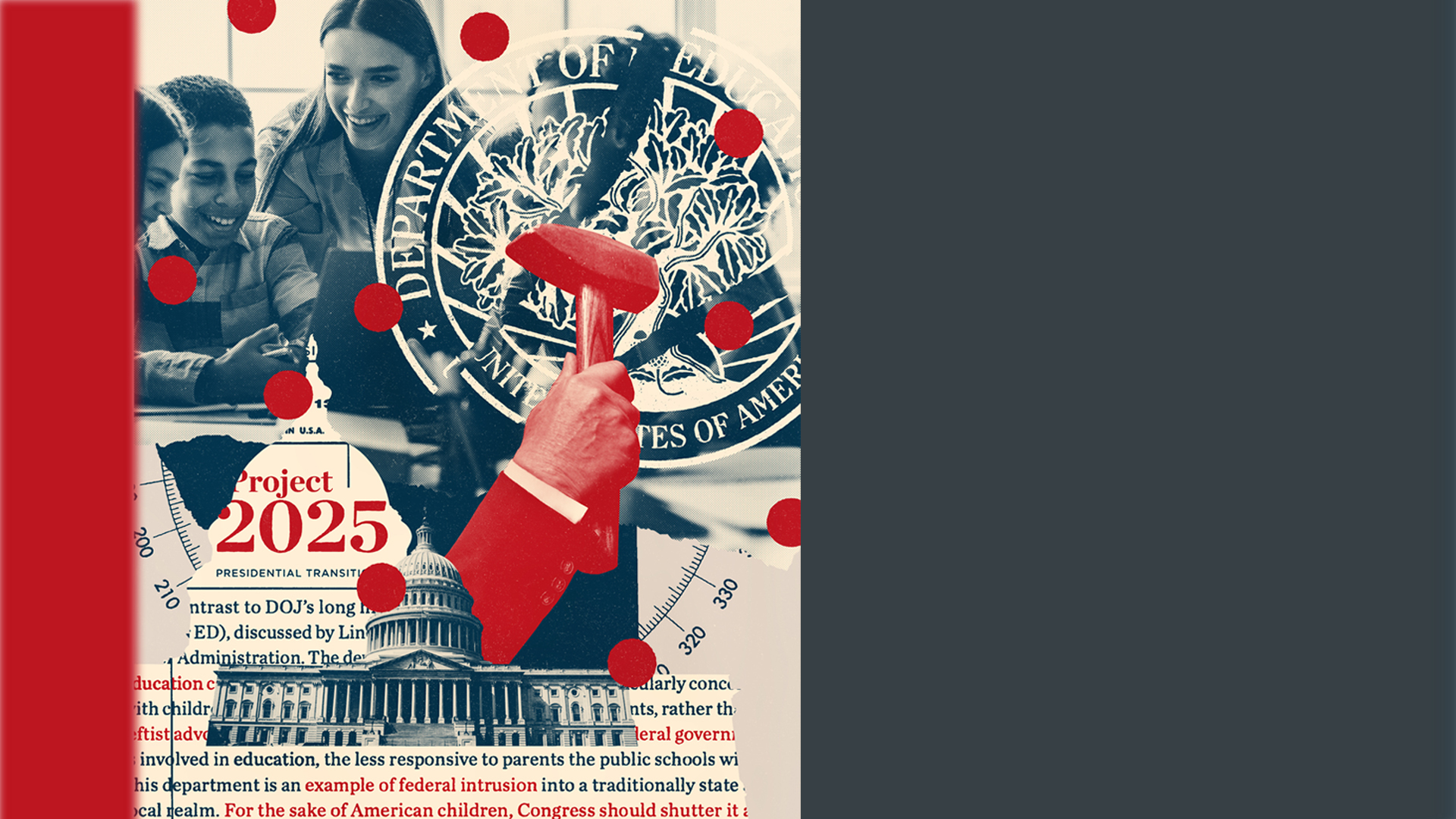
Laurie Patton: I’m taking a sort of high pragmatist approach to the situation. I want to frame everything that we have named as a possibility, whether it’s a question of the Department of Education, international students, student loan policies, or DEI work. This is an opportunity for what the Jewish tradition calls an argument for the sake of heaven, or what I frequently call an argument for the sake of the common good. In other words, you’ve got to have the argument.
I look forward to the educational sector joining together to talk about the genuine contributions of our immigrant faculty, staff, and students. I look forward to an argument where, instead of looking at assumptions behind a set of three initials, DEI, we have an argument for the sake of the common good on what we share as Republicans and Democrats and independents as we think about equality of opportunity, which is what we are committed to as Americans.
Proposals to abolish the US Department of Education have been there since the Reagan era. Let’s talk about where Washington bureaucracy helps education and where it doesn’t. I want that conversation to happen, but not under pressure or coercion. I want there to be a national conversation about what it means if you have a loan-forgiveness program for people who choose careers in social service but the universities and colleges they attended are then penalized for educating for lower-paying jobs in which people embrace public service. That’s an argument I want to have. Because the very idea of risk-sharing, which is part of the College Cost Reduction Act, introduced in 2024 by then Chair of the House Committee on Education and the Workforce Virginia Foxx, a Republican from North Carolina, is also based on an idea of the common good and shared public shouldering of a burden, which is underlying the idea of public service. The way I’m trying to move forward as a leader in this space is to look at how we prepare for those national debates as we gird up for having them.
Santa Ono: There are certain things that have been articulated that wouldn’t be straightforward. For example, removing accrediting bodies is not as easily done as said. It’s questionable whether things like freezing funds and fining institutions up to the totality of their endowment can be done. But there’s tremendous power in the presidency of the United States, and there are certain things that can be done by executive order. So, it’s absolutely appropriate for every college and university president, if they aren’t already doing so, to consider every scenario. Because of the rapidity of an executive order, there may be no opportunity for debate. It would be very wise for every leader to have now, if not yesterday, conversations with congressional leaders on both sides of the aisle, especially on the Republican side, to understand what the concerns are. Scenario planning now and waiting for an action, because of the rapidity and immediacy of certain
actions—that may be too late.
Lynn Pasquerella: President Trump has picked Elon Musk to lead the newly created Department of Government Efficiency. Musk has repeatedly attacked DEI programs and initiatives as a form of racism and has promised to abolish them. At a time when mental health issues are surpassing financial considerations as the primary reason students are either dropping out of college or not attending in the first place, how do we ensure that our campuses are places of welcome and belonging for all students?
Santa Ono: The University of Michigan and DEI have a long history. Many of the programs that exist nationally and globally were innovated here. Recent news articles about that history featured interviews with members of our community about the effectiveness of our DEI programs and whether the size and budget of the programs are appropriate. The crux of the criticism resulting from the articles was that the interviews indicated to several people, including faculty, staff, and students, that the programs that we’ve been committed to for decades have not been impactful. Some have even said that they have been divisive. Some have said that they might be part of the narrative that resulted in a challenging environment on our campus. All of that, as intellectuals, we need to hear. We need to honestly be self-critical and be responsive.
We are having those sorts of conversations with all of the deans and many members of the community. There’s a spectrum of views, to be frank, about what was reported in terms of the effectiveness of our DEI program. That’s appropriate. There should be a diversity of views. There should be debates internally. Whatever actions we take in regard to the question about removing DEI have to be based upon an honest and careful and comprehensive analysis of what we believe, and also an honest introspection based upon the criticisms that have been made by a large proportion of society.
3. Public Trust in Higher Ed and the American Dream
‘Higher education is not just about individual success—it is a common good that strengthens society as a whole.’
Lynn Pasquerella: Over the past few years, there’s been a changing portrait of American values signaled by a decoupling of higher education from the American dream, growing mistrust in the academy, and skepticism around the value of a college degree. What should we be doing to restore public trust in higher education?
David Wilson: We must be crystal clear about the value of a college degree—and the data support its significance. Research shows that individuals with a high-quality postsecondary credential, particularly a bachelor’s degree, earn, on average, $1.2 million more over their lifetime than those without a college education. The economic benefits are undeniable.
But higher education is not just about individual success—it is a common good that strengthens society as a whole. We must emphasize its role in building stronger communities, fostering civility, and equipping individuals with the ability to engage in thoughtful, constructive discourse. A college education enables people to navigate difficult conversations, respect differing viewpoints, and disagree without resorting to division and hostility. Unfortunately, the public has been misled, and there is diminishing recognition of these vital societal benefits.
Additionally, we have done many White males in this country a disservice. Too many have bought into the false narrative that going to college will turn them into something undesirable—when, in reality, higher education remains one of the most effective pathways to upward mobility. I speak from experience: I was born in rural Alabama, the son of a sharecropping cotton planter, and it was education that allowed me to move into the middle class.
I fear many young men today will one day wake up in their forties and realize they missed a critical opportunity to change their social and economic trajectory through education. Ironically, the very individuals discouraging them from attending college are often those with multiple degrees from elite institutions—people who know firsthand the power of higher education.
We must wake the public up to what is truly happening and challenge the misinformation that is holding so many back from pursuing opportunities that could transform their futures.

4. Community, Courage, and a New Narrative
‘The basic fact is that most days in higher education are great days.’
Lynn Pasquerella: Each of you has shown, through your leadership and promoting your institutions as anchor institutions, the importance of working in partnership with communities to demonstrate that your success is inextricably linked to the psychological, social, educational, and economic well-being of those in the communities in which you’re located, those you seek to serve.
Laurie Patton: Opinions about higher education today are using a binary approach to a nonbinary problem. We have a binary political system, but most of the problems we have to solve are nonbinary and hugely complex. When we built our conflict transformation program at Middlebury and gave students tools to be unafraid to have tough arguments, to be conservative in a liberal environment, to have really unpopular opinions, to say the brave thing, we started with listening and the lesson that “you think you’re listening, but you’re actually performative listening.”
What listening means is that you stay at the table. You stay at the table far longer than you’re comfortable with. Louis Menand, in a beautiful article in the New Yorker in 2011, named three reasons for an education: (1) a sorting mechanism for talent, and at times, prestige; (2) a place to explore ideas and purpose; and (3) a place to earn credentials to get a job. I would add a fourth: courage. I think it’s the biggest value of a liberal education.
In terms of the question of how we change the narrative around the decreasing belief in the value of a higher education, part of me is super pessimistic. We’ve had lots of brilliant people writing lots of things for decades, and the narrative hasn’t shifted. I worry that because we are so complex, it’s impossible for the media to tell a true story about higher education. A true story would involve so many different things, but it would include the basic fact that most days in higher education are great days where there is diversity of opinion and where students are made uncomfortable and learn.
I believe America can still recognize itself at the local level, including when it comes to the value of higher education. It cannot recognize itself as much at the state level and certainly even less, almost to the point of despair, at the national level. But if we stay at that local level, higher education can make a super powerful case for itself. That’s where I focused so much of my energies at Middlebury, even as the college is also national and international. Middlebury is the largest employer in Addison County by far. That’s a privilege and a challenge and also a responsibility.
We stay united by remaining student focused. We humanize those with differing political views. Middlebury and Addison County have many different views within it. We stay grounded every day in local community first, which does not mean becoming regionalist or provincial. It means staying grounded in local community.
5. A Moral and Social Responsibility to Prepare Citizens of a Democracy
‘We have an opportunity and a responsibility to ask ourselves, Have we failed as a sector to teach these central values to developing citizens?’
Lynn Pasquerella: Over the past decade, the criticism of higher education has focused on the fact that higher education is too expensive, too difficult to access, doesn’t teach students twenty-first-century skills, or that we’re bastions of liberal progressivism, intent on brainwashing the next generation of snowflakes. There’s been a new form of criticism after the October 7, 2023, attack by Hamas on Israel that’s focused on the ways in which it’s perceived that colleges and universities are failing when it comes to teaching students moral and social responsibility. So, what’s been learned over the past year and a half from the handling of campus protests, the challenges that we face in countering false narratives that are out there, and facing negative stories in the media?
Santa Ono: Some of those criticisms that you mentioned in terms of affordability and the relevance of skills obtained while accomplishing a degree relative to workforce needs are somewhat accurate. Over the past forty years, the costs of a college education, tuition, and room and board have skyrocketed faster than many individuals’ ability to pay. For that reason, the University of Michigan just doubled the amount of the minimum household income to be eligible for free tuition in our Go Blue Guarantee program. When it comes to the criticism about workforce needs, higher ed as a sector doesn’t do that good of a job changing curriculum. We are, in many cases, a little bit of an ivory tower, and we don’t talk to employers in the outside world enough. There are things that we can do about that.
To the question of whether we do a good job of teaching civics and promoting and modeling civil discourse—that’s one thing that liberal arts colleges do much better than large research universities. Laurie and I both worked at Emory University, and you could put, at least back then, everyone in one class into one chapel and talk to all of them at once. At a place like the University of Michigan, where you have around nine thousand students per class, maybe you could do it in a basketball arena, but it certainly is less achievable because of scale.
The other problem for a large research university is that there is less of a common core. The faculty is very large, and the curriculum for each major is decentralized. Not only in university education but also in K–12, we have an opportunity and a responsibility to ask ourselves, Have we failed as a sector, putting aside the shining examples of certain liberal arts colleges, partially because of scale, to teach these central values to developing citizens? The argument that we’re decentralized or we’re too large is an excuse. It should be the responsibility of educational institutions, small and large, to make this a priority.
The University of Michigan is launching the Institute for Civil Discourse, which will welcome students and faculty from all nineteen schools and colleges to come together to learn to constructively engage with different viewpoints and ideologies. That is something you have to teach. Otherwise, I fear that institutions in our nation and the world will further retract into insular communities that do not talk to each other, do not try to understand an opposing view.
Laurie Patton: Liberal arts and sciences colleges do have an advantage in this space. What Santa is describing is combining the bridging of social capital, which is creating connections between people of diverse backgrounds, and the bonding of social capital, which is deepening connections with people of similar backgrounds. Participating in a small community allows members to actually transform bridging social capital to bonding social capital because, though each individual is different, they have a similar background, which is their liberal arts and sciences experience.
There are downsides to a small institution as well—I don’t want to say it’s all rosy. But for bigger places, the questions is, How do we find ways to bridge and bond social capital so that it feels like there are small communities within that large space?
David Wilson: I firmly believe that the cost of obtaining an undergraduate degree has spiraled out of control, and much of the backlash against higher education stems from this reality. As a sector, we must confront this issue head-on and work toward solutions that ensure college remains accessible and affordable.
Beyond cost, higher education must actively engage with the world beyond campus. We cannot remain confined to our offices and classrooms—we must listen to employers, industry leaders, and policymakers to better understand the skills and competencies needed in today’s workforce. We asked employers, “If you were designing a baccalaureate degree that aligns with the skill set you seek in new hires, what would it include?” Their feedback directly informed the development of new academic programs at Morgan. As a result, we have introduced degrees that address the work of the future and the future of work, including a bachelor of science (BS) in interior design, a BS in mechatronics engineering, a master of science in data analytics, and a PhD in applied sociology and social justice. While many of these programs are rooted in the liberal arts, they also align with emerging workforce demands. Curricular realignment is a challenge, but it is necessary—higher education must continuously evolve to meet the country’s needs.
Additionally, we must connect the value of a college degree to national security and America’s global competitiveness. Education is not just about individual success—it is a strategic imperative. We must make it clear: This is a national security issue. A country cannot sustain itself—let alone thrive—if it only educates 5 percent of its population or limits higher education access to those who can afford it. Diversity in education is not just a moral or social ideal. It is essential for our economic strength, capacity for innovation, and global leadership. The United States is a diverse nation—there is no going back from that. If we fail to educate a broad and diverse population, we risk undermining the foundation of the nation that higher education has helped build.
So, the fundamental question is: Can we imagine an America without its vast constellation of colleges and universities? What would that look like? No other country in the world has the breadth and diversity of institutions that we do. Our system includes community colleges, small liberal arts institutions, comprehensive universities, and major research institutions. Together, they form the backbone of our nation’s strength and innovation. This unique higher education ecosystem has made America the envy of the world, and we must ensure it remains a powerful engine for opportunity, progress, and national prosperity.
Illustrations by David Weissberg
Exclusive Content
Subscribe to unlock all issues and articles
You have reached the maximum number of free views. Please login or become a member to continue reading.